

FROM BEETHOVEN TO BOCELLI

Updated: Jul 29
12 REMARKABLE PEOPLE WITH DISABILITIES WHO SHAPED OUR WORLD
By Shelby Ruch
According to the CDC, more than 1 in 4 adults in the United States have some kind of disability. From cognitive issues, mobility problems, loss of sight or hearing, disabilities impact over a quarter of Americans. For far too often, the accomplishments of people with disabilities have been overlooked, ignored, or downplayed. But their impact has shaped our society profoundly – woven into the fabric of science, art, civil rights, history, education, sports, entertainment, and everyday life. Join us in honoring these twelve pioneers as well as continuing to advocate for a more just and accessible world.

LOUIS BRAILLE, 1809-1852
French educator and founder of the famed braille reading and writing system, Louis Braille was blinded in one eye at the age of three in 1812. An infection spread to his other eye, which left him blind in both eyes. At this time in history, there were very few, if any, resources available for the blind. But Louis was determined to complete his education. He excelled and even received a scholarship to the French Royal Institute for Blind Youth. This is where he started developing the language that would become braille, allowing people with blindness to read and write quickly and efficiently. He completed and finished the language in 1824, at the young age of fifteen. As an adult, Louis worked as a professor at the Royal Institute and continued refining the braille language.
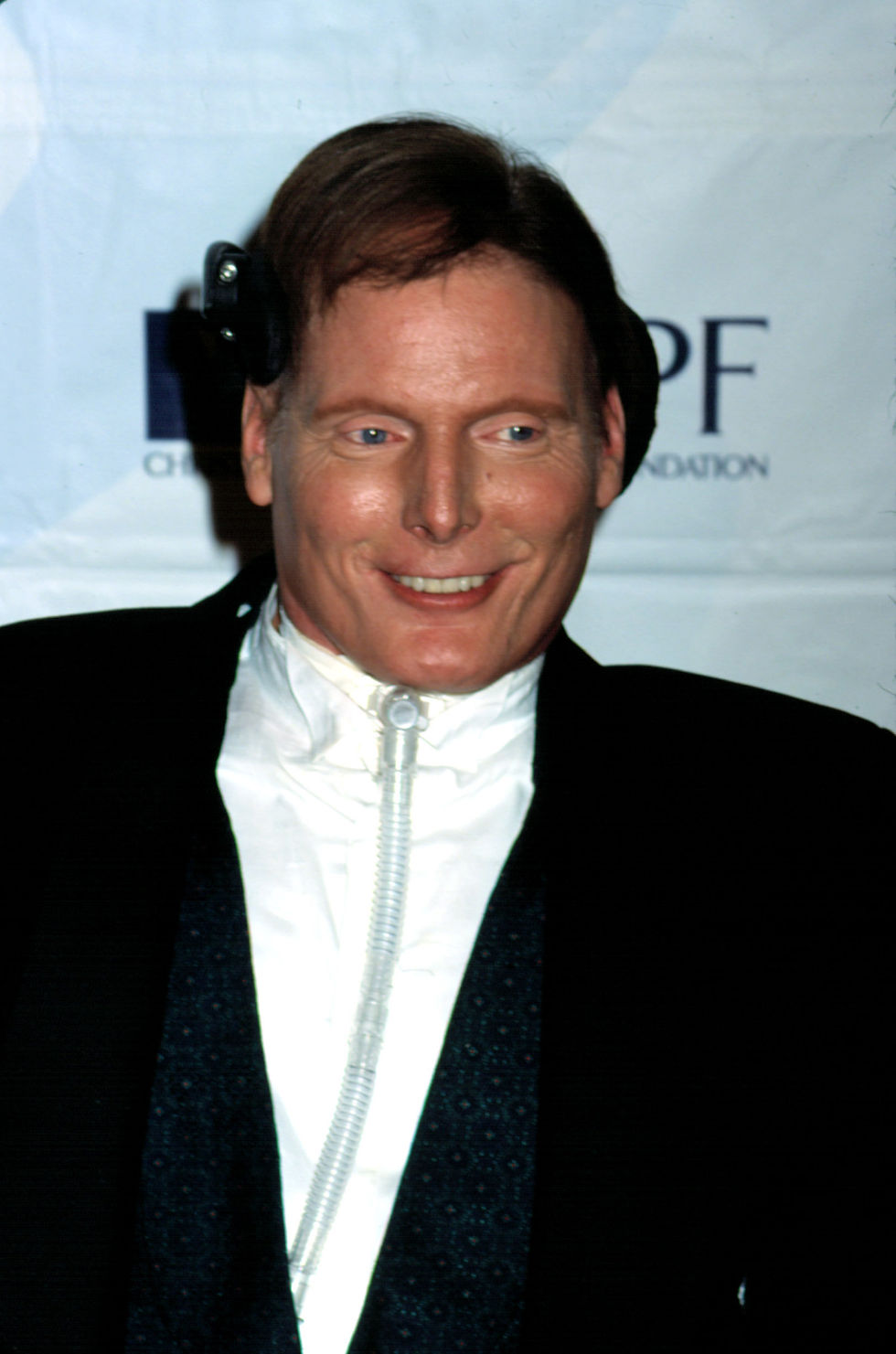
CHRISTOPHER REEVE, 1952-2004
An Emmy, Grammy, SAG, and British Academy Film awards-winning American actor, activist, author, and director, Reeve was perhaps most well-known for portraying the iconic Superman from 1978 to 1987 as well as his environmental activism. In 1995, Reeve was thrown from a horse during an equestrian competition. This accident paralyzed him from the neck down. For the rest of his life, he lobbied to increase spinal injury research and improve insurance coverage for those with disabilities. He led many organizations, including the Christopher and Dana Reeve Foundation, Reeve-Irvine Research Center, American Paralysis Association, and the National Organization on Disability. He worked tirelessly for the disabled community and used his celebrity status to bring focus on issues and causes the media would otherwise ignore.

STEVIE WONDER, 1950-PRESENT
A singer-songwriter, musician, and producer, Stevie Wonder was born blind due to retinopathy of prematurity, an eye disease that may affect premature babies causing growth of blood vessels in the retina. He was born to be a musician, though, and learned piano, harmonica, and drums at a young age, eventually signing with Motown at just eleven years old. He would go on to redefine the music industry, becoming one of the most important artists of the twentieth century. He has won 25 Grammy Awards, a Grammy Lifetime Achievement Award, and is one of only four artists to have won Album of the Year three times. Additionally, he founded The Wonder Vision Awards Program to help those with blindness and visual impairments find employment. He’s continually spoken out about the importance of making the world more accessible for those with disabilities, proving his dedication to this cause by making all of his song lyrics available in braille.

HARRIET TUBMAN, 1822-1913
Born into slavery, Harriet Tubman was injured at the age of 13 by a plantation overseer, which caused her to suffer from epilepsy for the rest of her life. However, she did not let this disability impact her effect on the world. She would escape from slavery and go on to lead around 70 people to freedom through the Underground Railroad. She also became an outspoken abolitionist, served as an army spy in the Civil War, and promoted women’s suffrage in the twentieth century.

ANDREA BOCELLI, 1958-PRESENT
One of the most famous voices in the world, Andrea Bocelli is an Italian opera, classical, and pop music singer. From birth, his vision was impaired due to congenital glaucoma. At only twelve years old, he lost his vision completely. While he spent time singing in his youth, he ended up going to law school and became a court-appointed lawyer before his music career took off. Notably, his album titled Romanza is one of the best-selling albums in history, and his Sacred Arias album is the best-selling classical album by a solo artist of all time. He’s also won six Classical Brit Awards, two Billboard Latin Music Awards, a Bambi Award, and has been nominated for six Grammy Awards.

FRIDA KAHLO, 1907-1954
A notable Mexican painter and artist, Kahlo survived a bus accident in her youth. This accident left her with many debilitating injuries that caused her lifelong chronic pain. The accident ended her dreams of becoming a doctor, but it allowed her to pursue art instead. She became well-known for her portraits, self-portraits, and works that were inspired by the nature, beauty, and culture of Mexico. She explored themes of pain, identity, gender, class, and more.
GERALDINE LAWHORN, 1916-2016
Born to two musicians, Geraldine Lawhorn was a performer, actress, pianist, instructor, and leader of the emerging deafblind community. By the age of nineteen, she had lost both her sight and her hearing. She took many courses at several different universities, including Columbia, Northwestern, the American Conservatory of Music, and more. She became a famed performer of a one-woman show in New York, participated in one of the first guide dog experiments, appeared on several daytime television shows, worked as a columnist for braille magazines, and was featured in Ebony Magazine. Despite these accolades, she still desired to finish her college degree. She earned a bachelor’s degree in the rehabilitation of deafblind adults from Northeastern Illinois University. She became the sixth deafblind person and the first deafblind African American person to graduate from college. She spent her later years traveling throughout the United States educating schools and colleges in how to teach to the deafblind community.

JOHN WESLEY POWELL, 1834-1902
A Major in the United States Army, veteran of the Civil War, geologist, explorer, conservationist, and professor at Illinois Wesleyan University, John Wesley Powell was the second director of the U.S. Geological Survey and the first director of the Bureau of Ethnology at the Smithsonian. During the Civil War, he was injured and lost an arm, which caused him excruciating pain for the rest of his life. Despite this, he continued serving in the Army and went on to lead several expeditions to the Rocky Mountains in 1867 and the Colorado River and Grand Canyon in 1869. In honor of his contributions, there are many things named after him, including the mineral powellite; Lake Powell, a reservoir on the Colorado River; Mount Powell, a summit in the Sierra Nevada range; Powell Peak in Colorado; Powell Plateau on the North Rim of the Grand Canyon; Powell, Wyoming, and more.

MARLA RUNYAN, 1969-PRESENT
An American track and field athlete and marathon runner, Marla is the first legally blind athlete to compete in the Olympics. She won four gold medals in the 1992 Paralympics, a gold and silver medal in the 1996 Paralympics, participated in the 2000 and 2004 Olympics, and won three consecutive 5000-meter races in the National Championships from 2001 to 2003.
WILMA MANKILLER, 1945-2010
An activist, social worker, and member of the Cherokee Nation, Wilma Mankiller served as the Deputy and Principal Chief of the Cherokee Nation from 1983 to 1995. She was also diagnosed with myasthenia gravis, a rare form of muscular dystrophy that impacts the neuromuscular system’s ability to function. She was the first woman elected as a chief of a major Indigenous tribe in the United States. She dedicated her life to her people and was recognized as the Ms. Magazine Woman of the Year in 1987, inducted into the National Women’s Hall of Fame in 1993, and received the Presidential Medal of Freedom in 1998.
OTTO WEIDT, 1883-1947
Compelled by the loss of his vision, Otto Weidt founded a broom factory where he employed up to 30 blind and deaf people during World War 2, many of whom were Jewish. When the Jewish community of Germany began to face persecution by the Nazis, Weidt helped them by falsifying documents, bribing officers, and even hiding employees in the back of his workshop. By 1943, many of his employees had been deported but he was able to save three: Inge Deutschkron, Alice Licht, and Hans Israelowicz. After the war, Weidt established an orphanage for survivors of the Nazi concentration camps. After his death, he was recognized as a Righteous Man of the World’s Nations by Yad Vashem and the Museum of Otto Weidt’s Workshop for the Blind remains on the original site and is dedicated to his life and heroic actions.

LUDWIG VAN BEETHOVEN, 1770-1827
One of the greatest and most recognizable composers in Western music history, Beethoven was a German composer and pianist. He had three distinctive periods of musical composition: the first, middle, and late periods. He began losing his hearing in his twenties during the middle period of his career, eventually becoming completely deaf. In spite of this, he composed many works, including some of his most famous, without being able to ever hear their performance.
These individuals represent just a glimpse into the rich tapestry that makes up the history of the disabled community. They remind us that disability is not a deficit to be overcome, but a strength that allows for seeing the world differently. We honor the journeys of, celebrate the achievements by, and renew our commitment to creating a more inclusive world for all who live with disabilities. ●

